Search Site

MU SUMMIT

MU SUMMIT 26: Rewriting the rules for young people who don’t fit the system

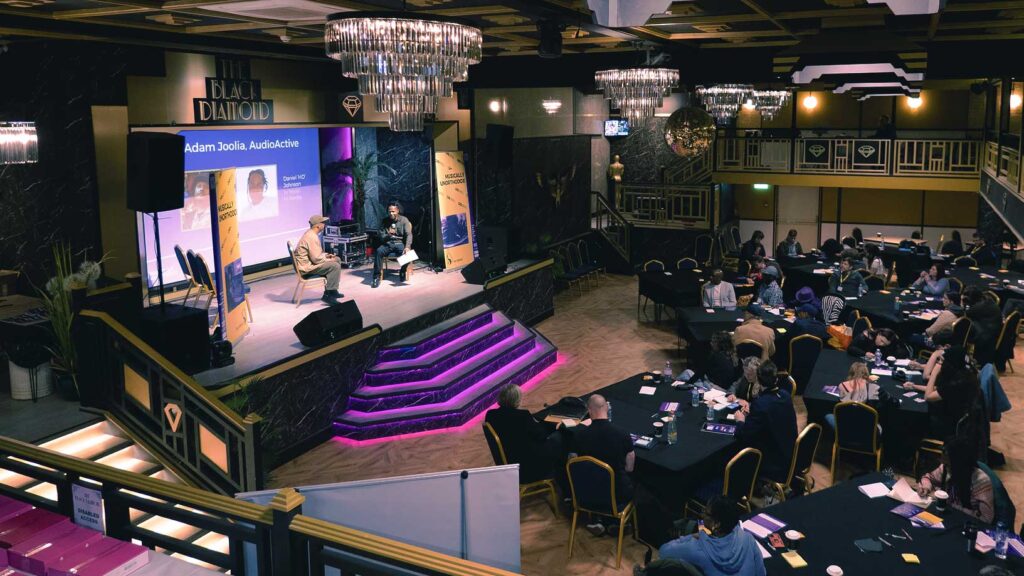
On Friday 17th April at The Black Diamond in Northampton was the second annual Musically Unorthodox Summit, a landmark event that broke the mould of traditional music conferences by putting young people, youth workers, police, educators, and global music executives in the same room together.

Funded by Youth Music and organised by In Music In Media and Pathways Into Music, the summit tackled a single, urgent question: How do we build viable, relevant career pathways for marginalised young people in the music and creative industries?

Unlike conventional industry events, the Musically Unorthodox Summit is designed to be a conversation, not a lecture. Split into three themes, Reach, Routes, and Reality, the day brought together an unprecedented coalition of stakeholders, including Northants Police, the Youth Justice Service, alternative education providers, BBC 1Xtra, and Sony Music affiliates.

“A lot of the time, conferences talk about young people, but there are no young people in the room,” said Daniel ‘HD’ Johnson, founder of Musically Unorthodox and In Music In Media. “We need the local authorities, the schools, the youth workers and the music and creative industries all at the same table, because that’s the only way we actually fix the disconnect.”

REACH: Building Trust, Not Programmes

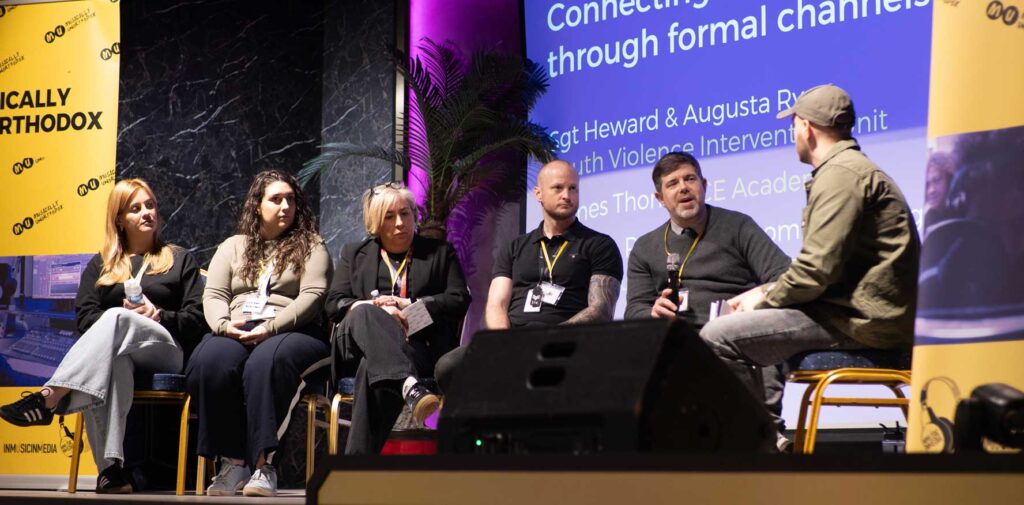
The morning sessions focused on the harsh reality of engagement. Panels featuring Sergeant Pete Heywood (Northants Police) and Augusta Ryan (Youth Violence Intervention Unit) revealed that traditional outreach fails without trust. Young people exploited into criminality do not respond to a single visit; they require three, four, or five persistent, non-judgemental touchpoints before engagement begins.

Sian Essam - Sai - Loway - Jhambiliki - Savvie

James Thomas (CE Academy, alternative provision) noted that permanently excluded young people arrive suffering from a “traumatic cycle of failure and rejection.” Provisions need to be trauma-informed, patient, and flexible, not rigid twelve-week courses.

Adam Joolia (Audio Active, Brighton) stressed the importance of physical space and grassroots visibility. “If we market to parents, we get middle-class kids. We market directly to young people, on the estates, walking past them for weeks just to say hello. That is the work.”

ROUTES: The End of the Linear Career Ladder

Chris Cooke (CMU, Pathways Into Music) delivered a critical framework: the traditional music industry (labels, publishers) only gets involved at “Step 4.” Steps 1-3 belong entirely to the artist. “The industry doesn’t start anything. It escalates what artists start for themselves.”

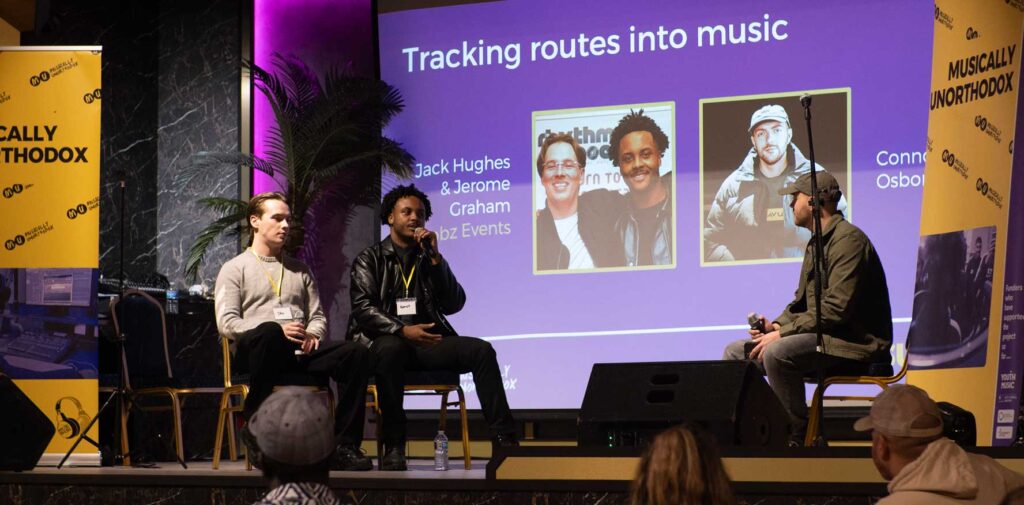
Guests: Jack Hughes & Jerome Graham / Interviewer: Connor ‘AON’ Osborn

Interviews with local success stories including Shoobz Events (Northampton promoters who now own the Encore venue) and Mimi The Music Blogger (who got her start via a viral Twitter thread) demonstrated that there is no single route into music. Instead, young people need a portfolio career, songwriting, production, events, marketing, not just the dream of being a pop star.

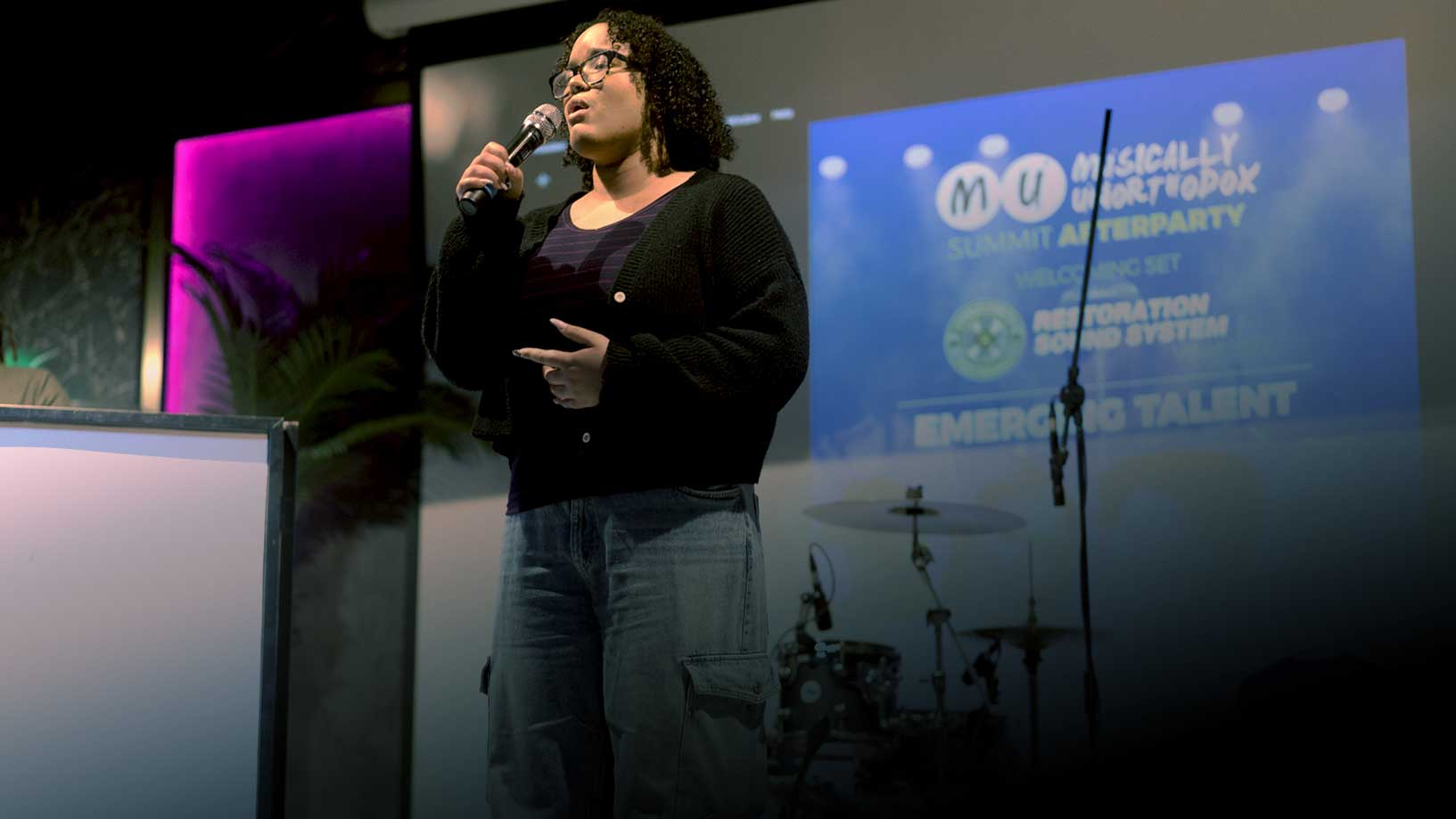
A recurring gap identified by nearly every speaker was the lack of business knowledge. Shniece McMenamin (singer-songwriter and summit host) admitted, “I don’t have that business acumen. Selling myself is the hardest part.” Kwabz (Mixtape Madness) echoed this, noting that young artists routinely leave “publishing income on the table” because no one taught them how to register with PRS.

REALITY: The Honest Truth About Music Careers

The afternoon took a deliberately unflinching look at the music industry’s dark side.

Elli Brazill, co-founder of Art Not Evidence, delivered a sobering keynote on the criminalisation of rap music. Her research shows that between 2020 and 2024, rap lyrics and videos were presented as evidence in at least 97 trials involving over 340 young people, over 80% of whom were Black or from ethnic minorities. “A young person using music as therapy can have their own art used to send them to prison,” she warned.

Elli Brazill (Art Not Evidence Campaign)

Fiona Connolly (Original Culture Festival, Bedford, in memory of DJ Rhino) shared her battle to get a licence after the council initially refused it based on the genre (reggae and hip-hop). She has pumped her life savings into the festival, which will not break even until year five or six. “People think because you run a festival, you’re rich. I still work full-time in finance.”

Yasin El Ashrafi (HQ Leicester) and Riki Bleau (Since ’93 Records / Sony Music) both warned of the “overnight success” myth. “Little Simz was a ‘newcomer’ after ten years of work,” Yasin noted. Riki, joining remotely from South Africa, said people sign with people, not companies, and how being a good person, punctual, humble, and kind is a forgotten superpower.

A Call to Action: The Northampton Music Map

The afternoon took a deliberately unflinching look at the music industry’s dark side.

Elli Brazill, co-founder of Art Not Evidence, delivered a sobering keynote on the criminalisation of rap music. Her research shows that between 2020 and 2024, rap lyrics and videos were presented as evidence in at least 97 trials involving over 340 young people, over 80% of whom were Black or from ethnic minorities. “A young person using music as therapy can have their own art used to send them to prison,” she warned.

Fiona Connolly (Original Culture Festival, Bedford, in memory of DJ Rhino) shared her battle to get a licence after the council initially refused it based on the genre (reggae and hip-hop). She has pumped her life savings into the festival, which will not break even until year five or six. “People think because you run a festival, you’re rich. I still work full-time in finance.”

Yasin El Ashrafi (HQ Leicester) and Riki Bleau (Since ’93 Records / Sony Music) both warned of the “overnight success” myth. “Little Simz was a ‘newcomer’ after ten years of work,” Yasin noted. Riki, joining remotely from South Africa, said people sign with people, not companies, and how being a good person, punctual, humble, and kind is a forgotten superpower.

A Call to Action: The Northampton Music Map

The summit concluded not with speeches, but with a practical challenge. Attendees called for the creation of a Northamptonshire Music Map, a simple, shared directory of every music organisation, youth group, venue, college course, and funding body in the county.

Sarah Thursby (Northampton College) noted, “There are so many brilliant things happening in this town, but they operate in silos. We need a map.”

Daniel Johnson confirmed the commitment: “Youth Music has funded us for three years. Our job now is to build an infrastructure that lasts.”

The Musically Unorthodox Summit will return in 2027. All panels and interviews from the 2026 event will be available free online at www.muconference.com in the coming weeks.

If you would like to be a part and help make next years event bigger and better register you Expression of Interest below.

More about MU Summit

Search Site